
A couple books a vineyard for their wedding in June, signs the contract, and then discovers three months before the big day that a municipal order prohibits amplified music outdoors after 10 PM. The DJ has to pack up his equipment, and the dance party moves indoors to a space that is too small.
This type of situation, increasingly common since 2023 in French tourist towns, illustrates a point that most wedding planning guides do not address: check the regulatory constraints of the venue before signing.
Sound regulations and reception venue: the trap to defuse first
Several coastal towns and historic city centers have tightened their regulations on noise pollution in recent years. Biarritz issued an order in July 2023 that strictly limits outdoor volume after 10 PM during the summer season. Aix-en-Provence updated its charter for municipal venues in 2024 in the same direction.
Before confirming a reception venue, we systematically ask the owner three things: the current municipal order, the permitted hours for outdoor sound systems, and the existence of an indoor fallback room. If the owner cannot provide these documents, it is a warning sign.
Feedback varies on this point, as some towns apply these rules flexibly off-season. For a summer wedding, caution is still advisable. You can also discover the organization on Party Wedding to cross-check information about specific constraints in each region.
Risk management clauses in service provider contracts
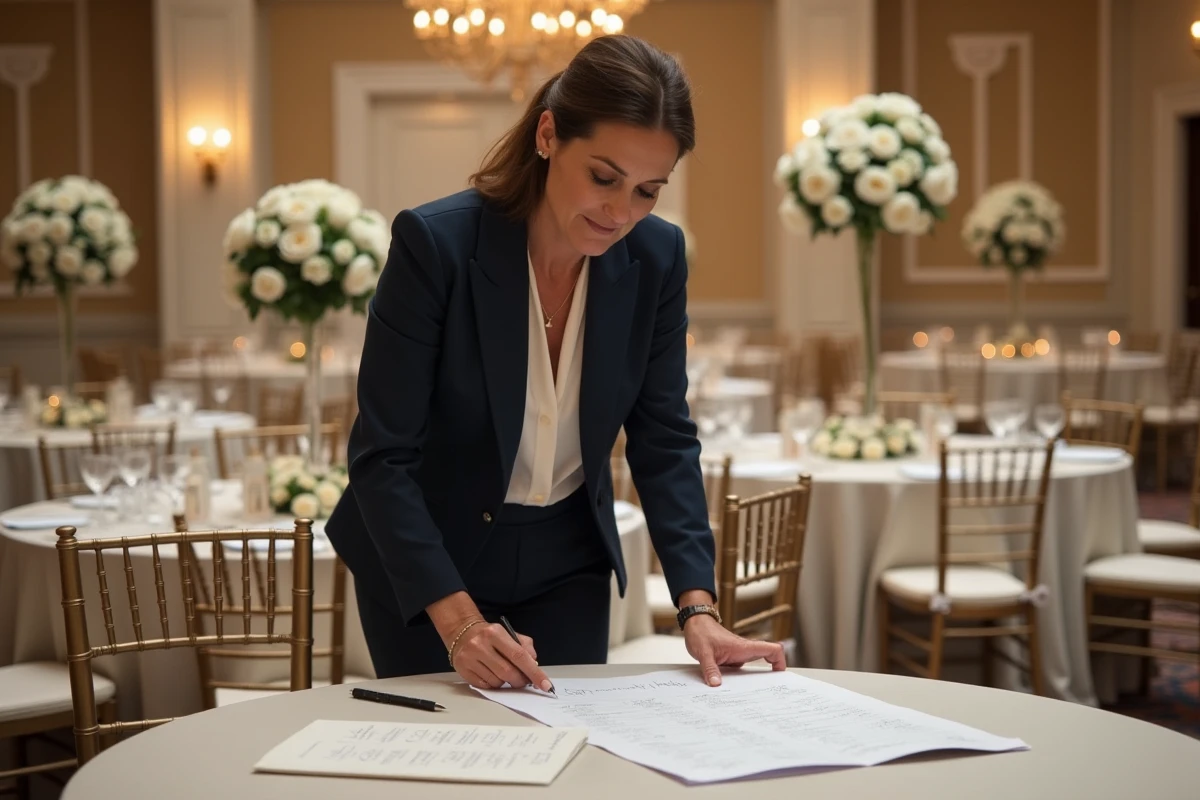
Wedding planners sharing their experiences in 2024-2025 report a generalization of contracts that include specific risk management clauses. Pandemic, heatwave, extreme weather events: these scenarios, once handled informally, now have dedicated paragraphs in contractual commitments.
What the caterer’s contract should include
The caterer is the service provider most exposed to uncertainties. A heatwave can make an outdoor buffet impractical for health reasons. A solid contract specifies the conditions for switching to indoor service, any additional costs, and notice periods.
- A postponement or cancellation clause with associated financial conditions (deposit retained, partial refund, free rescheduling)
- A detailed climate contingency plan: fallback location, capacity, logistics for transferring equipment
- Replacement procedures if a provider defaults at the last minute (subcontracting allowed or not)
No contract is signed without having read and negotiated these points. A provider who refuses to include a postponement clause deserves to have an alternative sought.
Wedding budget: balancing the truly important items
All guides recommend setting a budget. The real issue is knowing which items to sacrifice when the budget tightens. The classic mistake is to cut back on the service that takes the most time on the big day.
Venue and caterer absorb the majority of the budget
The reception venue and the caterer together represent the largest share of expenses. Reducing the number of guests by a few can have a direct and measurable effect on these two items. Going from eighty to seventy guests can free up enough budget to hire a more experienced photographer or a better band.
Conversely, floral decoration, often seen as a prestigious item, lends itself well to adjustments. Simpler arrangements made with seasonal and local flowers cost significantly less without degrading the visual atmosphere.

The budget safety margin
A reserve of at least ten percent of the total budget is planned to absorb unforeseen expenses. This margin covers caterer overruns (extra drinks, extended hours), unanticipated transportation costs, or the replacement of a damaged decorative item. Without this reserve, every unforeseen event forces cuts elsewhere in a hurry.
Eco-friendly menu: a choice that influences the venue and providers
The trend of eco-friendly weddings now goes beyond simply choosing reusable tableware. Since 2023-2024, more and more couples are asking their caterers to label the carbon footprint of the menu. The “Responsible Wedding and Reception” fair in Lyon in 2024 dedicated a complete cycle to this topic, with caterers reporting a significant increase in requests for environmental impact assessments.
Specifically, a low-impact menu relies on three levers: less red meat, local and seasonal products, and limiting all-you-can-eat buffets (which generate a lot of waste). This choice has a cascading effect on the rest of the organization.
- The reception venue must have a kitchen equipped to work with fresh products, which eliminates some areas without infrastructure
- The florist can align with the same logic by offering local and seasonal arrangements, reinforcing the coherence of the project
- Invitations and stationery can lean towards recycled paper or digital invitations, reducing a budget item often underestimated
A caterer capable of providing a quantified estimate of the meal’s carbon footprint is no longer an exception. It is a selection criterion that effectively filters engaged providers from those who settle for marketing rhetoric.

Preparation planning: the rhythm that avoids stress
A wedding is planned over a period of eight to fourteen months for most couples. The trap is to concentrate all decisions in the last three months. You gain peace of mind by scheduling structural reservations in the first third of the planning: venue, caterer, officiant, photographer.
The second third absorbs aesthetic and logistical choices: decoration, flowers, attire, stationery. The last third is dedicated to adjustments: seating plan, coordination with providers, rehearsal of the ceremony.
This division into three phases avoids the tunnel effect where everything seems urgent at once. Each week, you focus on a single main topic instead of juggling five simultaneous decisions.
Coordination on the big day is not improvised. Designating a trusted person (or a professional coordinator) to manage the timing between the ceremony, cocktail, and meal avoids the lags that tire guests and stress the couple. A well-organized wedding in advance is experienced on the big day without having to make last-minute decisions.