
The outdoor layout of a garden refers to the deliberate organization of surfaces, materials, and plants to transform raw land into a functional space. Before choosing a garden lounge or planting a hedge, the nature of the soil, exposure, and local regulatory constraints influence every decision. Successfully achieving this outdoor layout requires understanding some technical principles often overlooked in traditional guides.
Soil Permeability and Choice of Outdoor Surfaces
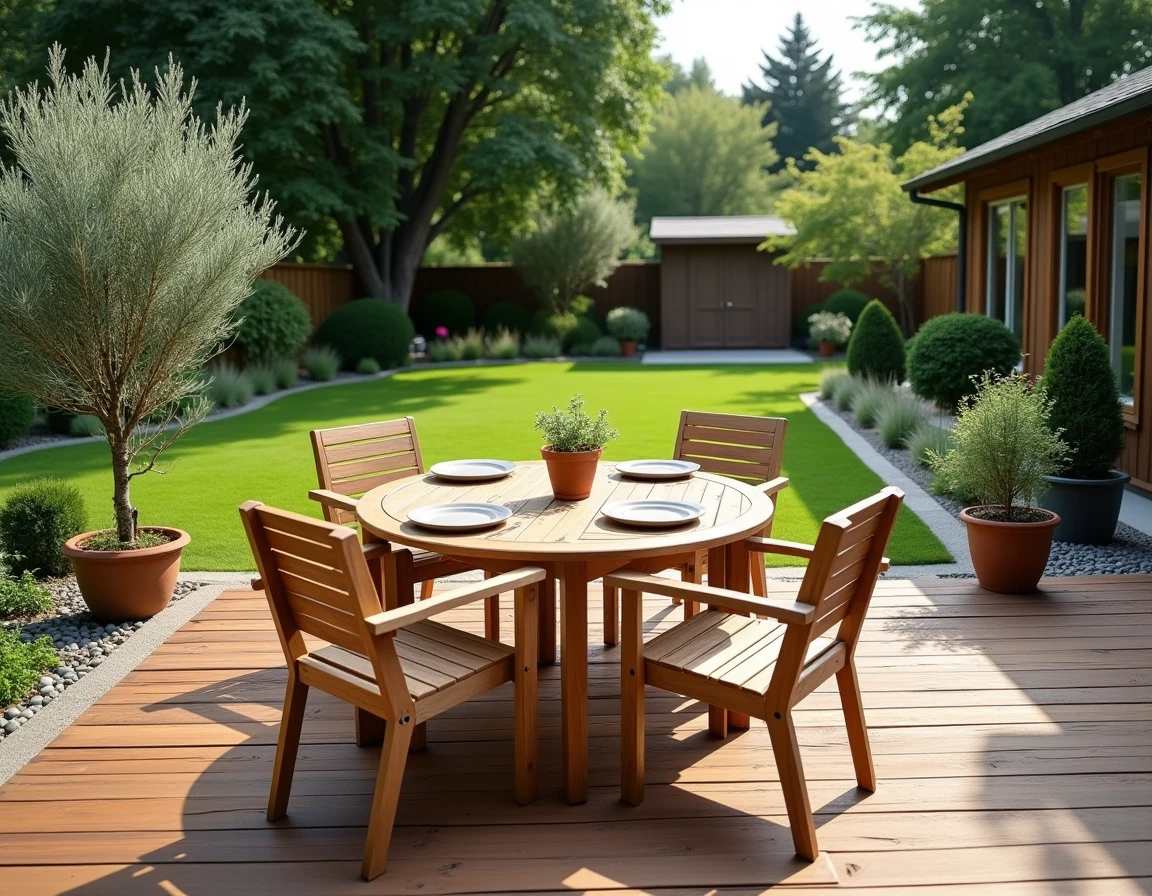
Local urban planning regulations increasingly incorporate requirements for permeable surfaces in residential areas. Before pouring a concrete slab for your terrace, check your PLU recommendations: some municipalities impose a minimum percentage of draining soil on the plot.
This constraint guides the choice of materials. Wide-joint pavers, stabilized gravel, or slabs on pedestals allow water to infiltrate instead of directing it to the collective drainage system. Composite wood laid on ventilated joists offers a compromise between barefoot comfort and natural drainage.
Exploring the world of Ambiance Jardin allows you to visualize how terraces and mineral areas can coexist with permeable surfaces without sacrificing aesthetic appeal.
Considering permeability from the design stage also avoids unpleasant surprises: a poorly positioned impermeable terrace can cause water stagnation at the base of the facade, leading to moisture in the walls.
Plant Palette Adapted to Climate and Maintenance

In recent years, landscapers have reduced the use of water-intensive species. Traditional lawns, thujas, and certain hydrangeas are giving way to Mediterranean perennials and ornamental grasses that require much less watering.
This shift is not just a trend. In regions subject to summer water restrictions, a garden planted with lavenders, stipas, and shrubby sages remains green without intensive irrigation. The choice of plants directly determines the weekly maintenance time.
Structuring Plant Zones by Layers
A successful outdoor layout layers three levels of vegetation: a low layer (ground covers, perennials), an intermediate layer (evergreen shrubs, tall grasses), and a high layer (ornamental or fruit trees). This layering creates visual depth even in a small space.
- The low layer limits the growth of weeds and reduces weeding, especially with ground-cover plants like creeping thyme or sedum
- The intermediate layer structures the space by creating natural separations between relaxation areas and pathways
- The high layer provides localized shade and a vertical landmark that anchors the garden in the surrounding landscape
Planting these three layers while considering exposure (sun, partial shade, shade cast by the house) ensures uniform development without the need for permanent corrective interventions.
Rain Garden: Managing Rainwater by Creating a Decorative Element
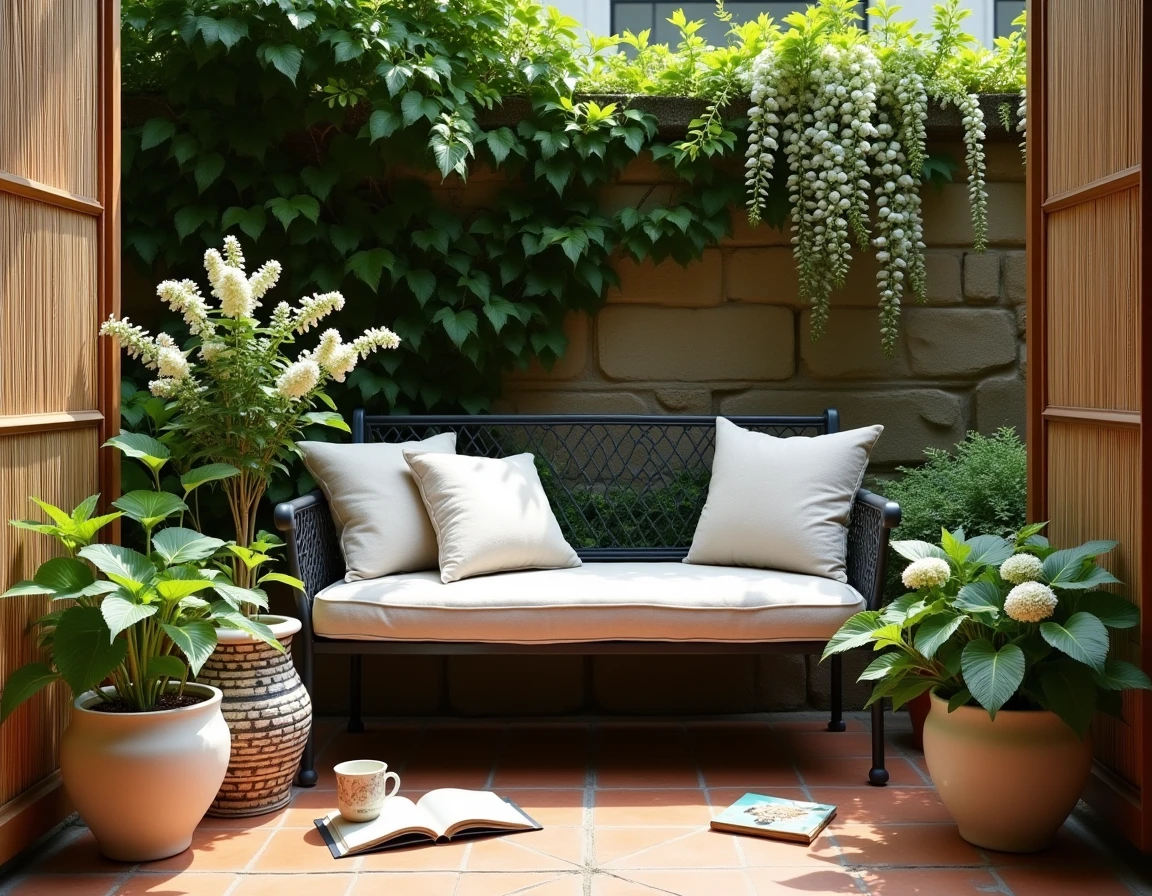
The rain garden is a shallow depression planted with hygrophilous plants that collects and filters runoff water from roofs or hard surfaces. This system limits the overload of the stormwater network while creating an attractive biodiversity zone.
Its principle is simple: water is directed by gravity (gutter, ditch, slight slope of the land) towards an infiltration basin planted with marsh irises, sedges, or willowherbs. The water infiltrates within a few hours instead of running off to the roadway.
The landscape swale operates on the same principle but in a linear form. It can run alongside a path or border a terrace, effectively replacing a concrete gutter with a vegetation element.
Sizing a Rain Garden
The catchment area (roof, terrace) determines the size of the basin. Generally, the basin should be able to absorb the volume of a heavy rain without overflowing towards the house. A landscaper or engineering office can calculate this volume based on local rainfall and soil type.
Clay soil infiltrates slowly: either the basin needs to be enlarged, or a layer of draining gravel should be incorporated under the planting substrate. Sandy soil absorbs quickly, which simplifies design.
Outdoor Lighting and Furniture: Details that Change the Use of the Garden
Outdoor lighting transforms a daytime garden into a nighttime living space. Two common mistakes: lighting uniformly (parking lot effect) or planning only one light point on the terrace.
Layered lighting creates depth at night just as plant layers do during the day. Place low bollards along pathways, recessed spots to highlight a remarkable tree, and functional lighting above the garden lounge table.
- Solar LED lights are suitable for paths and flower beds, with no wiring
- Low-voltage lighting is preferable for dining areas and stairs, where consistent brightness matters
- Outdoor string lights create a relaxing atmosphere but do not replace secure orientation lighting
For furniture, the choice between wood, metal, and woven resin depends less on taste than on the maintenance one is willing to accept. Untreated wood grays in one season. Metal heats up in the sun. Woven resin resists UV but does not age well under repeated weather without a cover. Selecting your garden lounge based on the actual capacity to maintain it avoids premature replacements.
A sustainable outdoor layout relies on technical choices made upfront: soil permeability, a water-efficient plant palette, intelligent runoff management. The rest (furniture, lighting, decorative elements) serves to dress an already coherent structure. It is better to spend time on the overall plan than on the finishes, as modifying a floor covering or moving a poorly positioned tree always costs more than placing them correctly from the start.