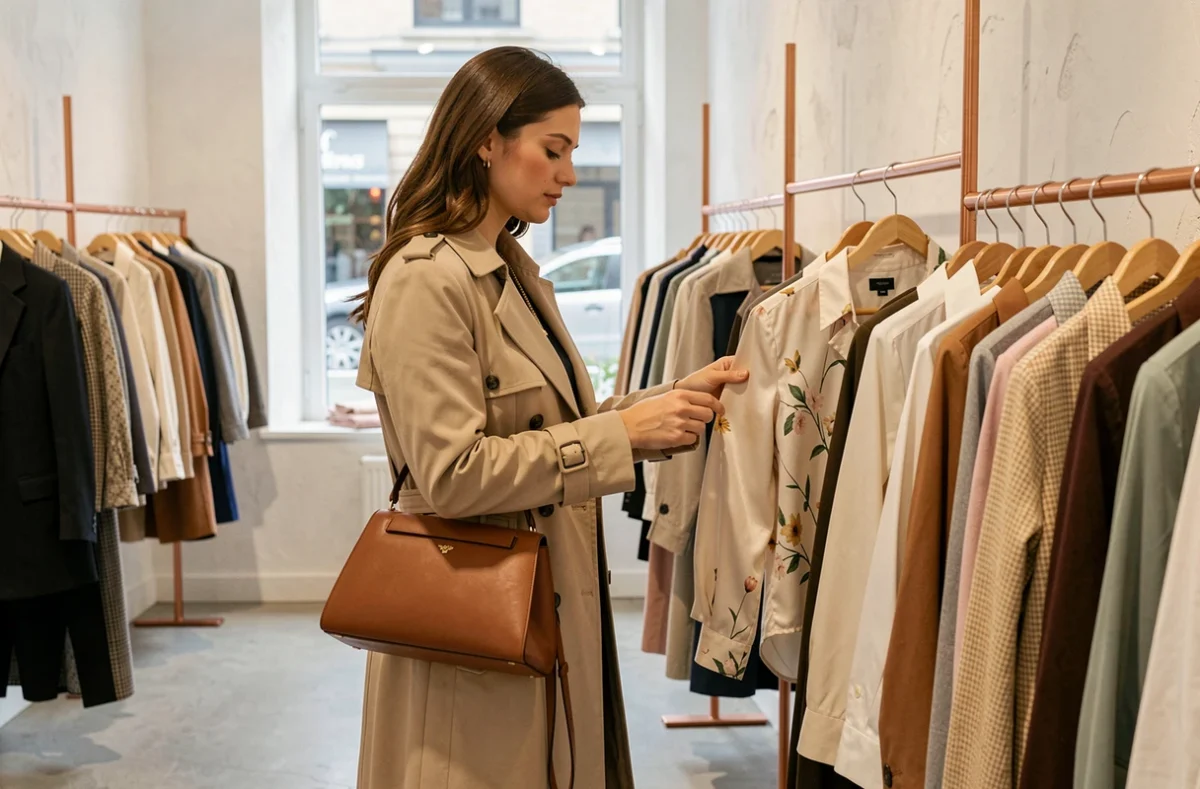
Fashion spending among the French has been declining for several months, according to a Joko analysis of banking transactions from 1.5 million users. At the same time, second-hand platforms are gaining ground, and a law regulating ultra-fast fashion is coming into effect. This context is reshaping the way we find fashion and beauty treasures without succumbing to compulsive buying.
Second-hand fashion: a purchasing reflex that does not guarantee sobriety
Second-hand textiles are on the rise in France. Online thrift stores, solidarity shops, and wardrobe sales are multiplying, and the reflex to “look first in second-hand” is becoming established among a growing segment of consumers.
The problem lies elsewhere. Oxfam emphasizes that buying second-hand only reduces environmental impact if it replaces a new purchase. Buying a vintage jacket in addition to three orders from a fast fashion platform does not change the overall balance. Field reports vary on this point: some second-hand buyers claim to have reduced their new purchases, while others admit to combining both channels.
For those looking for relevant fashion finds, the shopping selections on Fimina Mag allow you to spot pieces without opening multiple tabs across ten different platforms.
A simple criterion helps distinguish a good deal from unnecessary surplus: does the piece replace a worn or damaged garment in your current wardrobe? If the answer is no, the low price does not justify the purchase.

Anti-fast fashion law: what the new legal framework changes for online shopping
Law No. 2026-602 targets ultra-fast fashion platforms. It imposes concrete obligations that modify the online shopping experience.
- The affected sites will have to display messages related to sobriety, reuse, repair, and the environmental impact of delivery. The goal is to interrupt the automatic purchasing journey with factual information.
- Second-hand products are excluded from the framework, creating a clear distinction between low-cost new purchases and reuse purchases.
- Brands that focus on transparency (composition, manufacturing location, material sustainability) are mechanically advantaged compared to players who only compete on price.
Second-hand platforms are exempt from the anti-fast fashion law, which strengthens their positioning. For consumers, this means that the two universes (ultra-fast new and second-hand) will no longer be subject to the same display constraints.
The available data does not yet allow for measuring the actual effect of these messages on purchase volume. The implementing text specifying the concrete modalities has not yet produced its effects on a large scale.
Solid beauty and cosmetics: a growing segment with strict rules
The French market for solid cosmetics is experiencing steady growth. Shampoos, deodorants, and cleansers without plastic packaging now occupy entire shelves in concept stores and specialty shops.
This regulatory framework protects the buyer, but it also requires vigilance. A handmade soap sold without an ingredient list at a creator market is not compliant. This is not an aesthetic detail: it is a legal obligation that allows for checking the presence of allergens.
Identifying a reliable solid cosmetic
Two elements deserve attention before purchase:
- The presence of a complete INCI list, including for products sold in bulk or at ephemeral markets.
- The place of manufacture: a product made in France or in the European Union is subject to more accessible controls for the consumer in case of issues.

Concept stores and designer boutiques: where to look beyond marketplaces
Marketplaces concentrate the offer, but they also standardize discoveries. Recommendation algorithms steer users toward the same categories of products, limiting surprise.
Physical concept stores remain the best channel for finding fashion and beauty pieces that cannot be found online. In Paris, Toulouse, or Rennes, these shops select local creators, independent design brands, and small-batch items. The unit price is often higher, but the longevity and originality of the piece compensate in the long run.
Vintage constitutes another underutilized channel. Specialized vintage shops (as opposed to generalist platforms) perform curation work that filters out damaged or uninteresting pieces. The additional cost compared to a garage sale corresponds to this prior selection.
On the other hand, pop-up stores and ephemeral creator markets present a limitation: the frequent absence of a return policy. Checking the conditions before purchase avoids disappointments, especially for clothing whose fit cannot be tried on site.
The fashion market is undergoing a measurable contraction phase. The most relevant finds do not come from a higher purchase volume, but from a more selective approach: fewer pieces, better chosen, purchased through channels that allow for verifying quality and compliance before payment.