
Semolina does not handle temperature variations well, while parsley and mint quickly lose their freshness after freezing. However, some mixtures withstand the cold better than others, provided that a few precautions are taken. The issue of food safety also arises, as the presence of raw vegetables and fresh herbs in tabbouleh alters the usual preservation rules. A few simple gestures can help avoid the main pitfalls and best preserve both texture and flavor.
Homemade or store-bought tabbouleh: what to know before freezing
Tabbouleh embodies all the freshness of Mediterranean tables. But once the recipe is made, the dilemma quickly arises: can you freeze homemade tabbouleh without degrading its taste or texture? The choice of ingredients and the method of preservation make all the difference.
When preparing tabbouleh at home, the question of freezing confronts the delicacy of certain elements. Tomatoes, cucumbers, parsley, and mint do not always withstand the cold: they quickly lose color, firmness, or their aroma. In contrast, semolina or bulgur hold up well. To preserve the balance of the dish, it is better to separate: you can freeze the grain base, then add raw vegetables and fresh herbs just before serving.
In the freezer, homemade tabbouleh keeps for two to three months, much longer than the few days allowed in the refrigerator. Store-bought versions, enriched with preservatives, manage freezing better, while sacrificing a bit of their naturalness. The trick: prioritize individual portions and well-sealed containers. This way, you avoid any health risks and facilitate thawing, unlike the trap of refreezing, which should always be avoided.
Which tabbouleh ingredients can (or cannot) withstand freezing?
In the composition of tabbouleh, each ingredient reacts differently to the cold. Semolina and bulgur, true pillars of the recipe, withstand the freezing process well, as long as they are kept away from seasoning and water-laden vegetables.
On the other hand, herbs, tomatoes, and cucumbers really suffer: colors fade, aromas disappear, and textures break down. Bell peppers and celery, however, show more resistance, as their firm flesh withstands freezing better.
To help you out, here’s a guideline based on the main ingredients:
- Freeze well: semolina, bulgur, bell pepper, olive oil.
- Poorly resistant: parsley, mint, tomato, cucumber.
The best compromise? Prepare the grain part (with possibly cooked bell pepper or celery if you like), then add everything else—fresh herbs, tomatoes, lemon juice or vinegar, oil—after taking it out of the freezer. This way, you can retain the freshness and zest of tabbouleh, even after a few weeks in the cold.
Successfully thawing: practical tips to preserve taste and safety
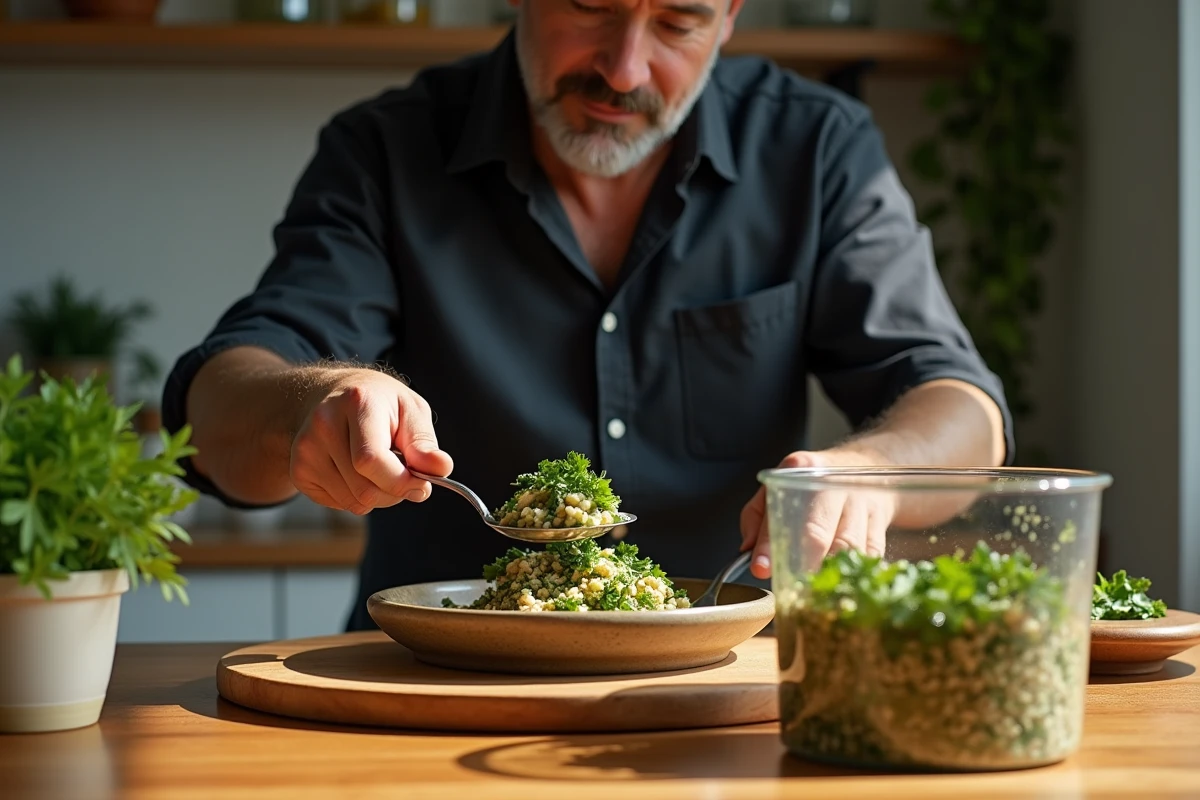
A sealed container and properly portioned quantities: these are two allies for successfully thawing homemade tabbouleh. By limiting air, you slow down the formation of ice crystals and simplify meal logistics. To thaw under the best conditions, prefer the refrigerator: the texture is better preserved, and the microbial risk is limited.
It is still possible to thaw at room temperature, but only if the tabbouleh is consumed within the hour. The microwave should be used as a last resort, as it may soften the preparation. Above all, avoid refreezing a dish that has already been thawed: food safety would not survive, nor would the pleasure of tasting.
After thawing, a few additions can elevate everything: chopped fresh herbs, a splash of lemon, olive oil, or vinegar restore tabbouleh’s unique freshness. Before serving, take a moment to check the appearance of the dish. Dull herbs, an off smell, a sticky texture, or cloudy water are real warning signs. For portions, count between 100 and 150 grams as a side or up to 250 grams for a complete meal. Then, all that’s left is to share, as mezze or around grilled dishes, with Lebanese bread.
No need to give up the pleasure of tabbouleh out of season. Even after freezing, this dish can regain its aura and surprise your guests. The key lies in a few gestures and following the right steps: the promise of a tabbouleh that, even after coming back from the cold, does not compromise on flavor or its original freshness.