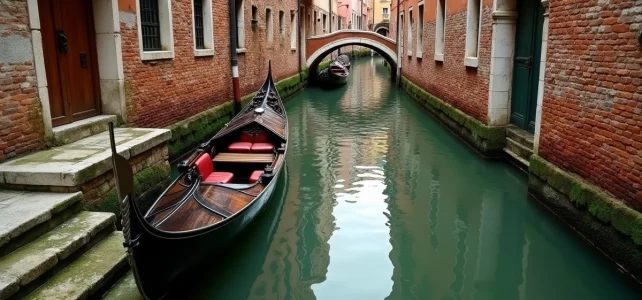
Venice welcomes millions of visitors each year, but few of them wonder what happens to the wastewater of the lagoon city. The absence of a traditional underground sewer network distinguishes Venice from almost all major European cities. Understanding this hybrid system, between medieval heritage and contemporary constraints, requires looking at what happens beneath the surface of the canals.
Separate collectors and pumping stations: the data of the Venetian network
The sewage system of Venice does not rely on a centralized underground network like in Paris or Rome. Domestic wastewater passes through short pipes that discharge, for a still significant part, directly into the canals. In recent years, the municipality and the operator Veritas SpA have been developing separate collectors in the historical sestieri, aimed at separating rainwater and wastewater before treatment.
The annual report of Veritas SpA, published in February 2026, documents a declining trend in fecal coliform levels in the main canals thanks to the extension of these collectors. The effort remains uneven across neighborhoods, due to the variable altitude of buildings and the complexity of pile foundations.
| Parameter | Traditional Venetian system | Modern separate network (in deployment) |
|---|---|---|
| Type of collection | Direct discharge into the canals via short pipes | Separation of wastewater / rainwater, pumping to stations |
| Treatment | Dilution by the tide, no treatment | Pumping stations, transfer to the mainland |
| Coverage | Majority of historical sestieri | Progressive extension, still partial |
| Impact on fecal coliforms | High levels, especially in summer | Documented decrease since mid-2025 |
| Main constraint | Total dependence on the tidal cycle | Variable altitude of buildings, installation cost |
To delve into the functioning of sewers in Venice, it is essential to keep in mind that the traditional system relied entirely on the flushing effect of the tides. The rising and falling water of the lagoon churned and evacuated effluents into the Adriatic Sea, a natural mechanism but far from sufficient in the face of current urban and tourist pressure.
European directive on urban waters: what Venice needs to change
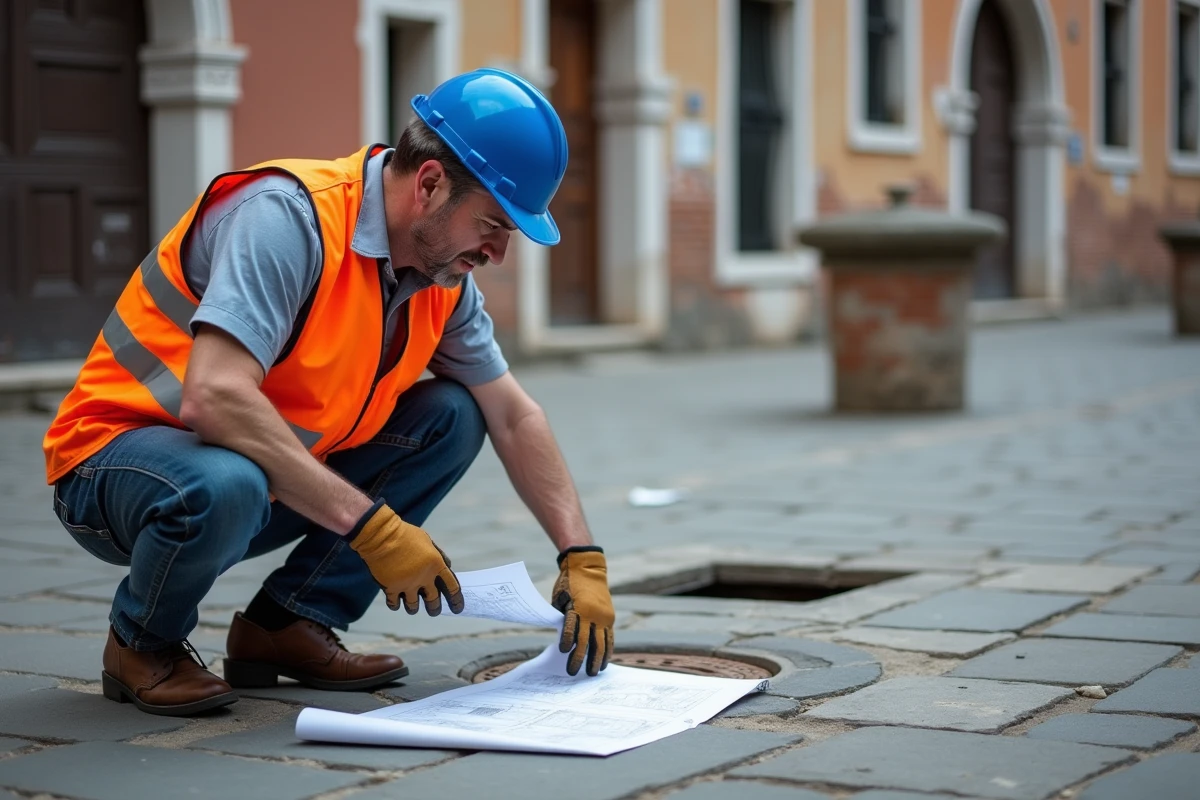
The revised directive on urban waters adopted by the European Union in 2024 imposes stricter standards on the treatment of domestic effluents in Venice. This regulation requires the city to increase the number of pumping stations directing wastewater to treatment facilities located on the mainland.
The regulatory challenge faces an architectural reality: installing modern pipelines in an urban fabric built on millions of wooden piles, with foundations sometimes dating back several centuries, represents a technical challenge without equivalent in Europe. Connection works must contend with alleys less than two meters wide and varying ground levels from one building to another.
Retention nets and maintenance during acqua alta
Technicians from the Comune di Venezia installed “nasse di ritenzione” (retention nets) upstream of the pumps in 2025. These devices capture solid waste before it damages the pumping equipment. According to feedback published in La Nuova Venezia in April 2026, these nets have reduced pump failures by 30% during acqua alta events.
Their maintenance remains manual and labor-intensive. Each high tide carries significant volumes of debris, necessitating frequent interventions under difficult conditions.
Pollution-degrading bacteria and biotechnology applied to Venetian canals
The most recent angle in the management of Venetian canals concerns research in biotechnology. Programs are exploring the use of bacterial strains capable of degrading organic matter directly in the sediments of the canals. The goal: to reduce the residual pollution load where separate collectors have not yet been installed.
This approach is particularly relevant for Venice, where the underground network will never be able to cover the entire historic center due to architectural constraints. Pollution-degrading bacteria would act as a biological complement to mechanical treatment, breaking down nitrogen and phosphorus compounds that fuel algal blooms in the lagoon.
- The targeted bacterial strains are selected for their ability to function in saline environments, a constraint specific to the Venetian lagoon.
- The deployment is done by inoculation into the sediments, without requiring heavy infrastructure works.
- Preliminary results are monitored by the Venice Safeguard Authority, which assesses their compatibility with the objectives of the European directive on urban waters.
Acqua alta and rising waters: why the Venetian sewage system remains vulnerable
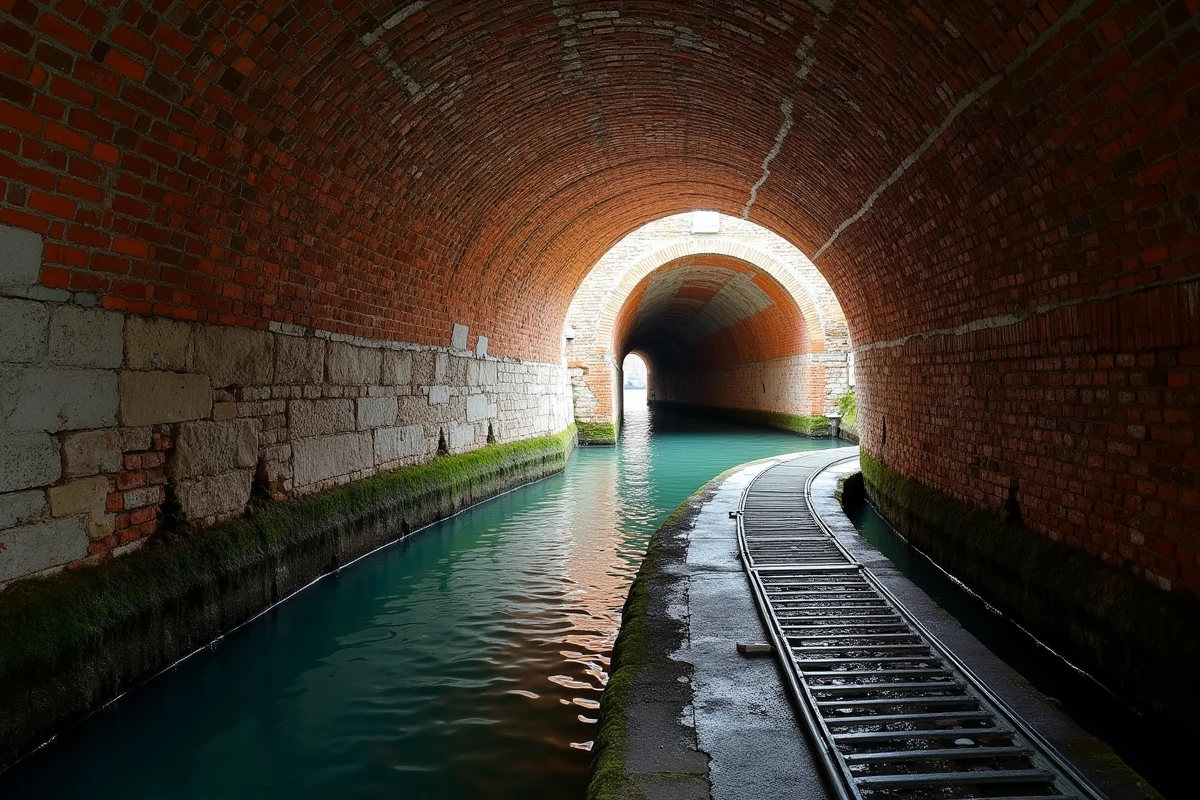
The functioning of sewers in Venice structurally depends on the tidal cycle. When the level rises beyond usual thresholds, the discharge pipes become submerged. Wastewater then backs up into the streets and ground floors, a phenomenon that Venetians have known for centuries but whose frequency is increasing.
The MOSE system, designed to protect the lagoon from exceptional tides, does not solve the problem of internal sanitation. It prevents seawater from entering but does not treat domestic effluents that stagnate inside the lagoon when the barriers are raised. This paradox illustrates the tension between flood protection and the renewal of waters necessary for the natural evacuation of pollutants.
Conversely, on days of pronounced low tide, such as the episodes documented by France Info where the canals run dry, the problem reverses: without water to dilute and transport the effluents, odors and bacterial concentration rise rapidly.
The Venetian sanitation system thus operates within a narrow window of ideal conditions, between a tide that is too high causing backflows and a tide that is too low eliminating the flushing mechanism. The extension of separate collectors and biotechnological innovations aim to reduce this dependence, but the complete transformation of the network remains a project spanning several decades, with costs and technical complexities unmatched in any other European city classified as a World Heritage site.