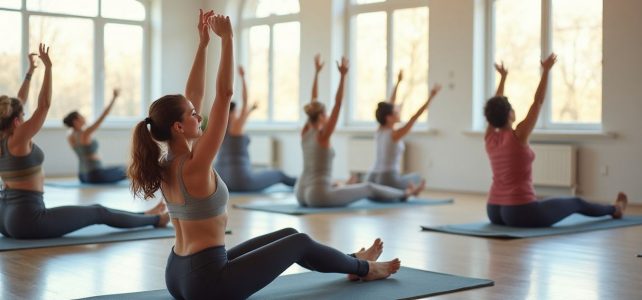
We can no longer count the straightened backs and the calmed minds since Pilates has firmly established itself in our lives. Born from the determination of Joseph Pilates, this discipline goes far beyond the scope of a simple workout. It invites us to rethink our relationship with the body, blending strength, balance, and presence to build a solid silhouette and a clearer mind. Practiced weekly by millions of enthusiasts, Pilates stands as a compass for those looking to strengthen their core, correct their posture, or even overcome an injury. Regardless of the level, grasping the fundamentals of this method remains the key to feeling its effects in daily life.
Origins and Philosophy of Pilates
To understand what makes Pilates unique, we must look back at its genesis. It all began in early 20th century Germany, where Joseph Pilates developed a method that draws from yoga, gymnastics, and dance. The stated goal: to sculpt a body and mind capable of facing challenges without sacrificing inner balance.
Further reading : The latest trends and essential tips for staying informed about automobiles
To comprehend what differentiates Pilates from other practices, a few key points are essential:
- The method was initially named Contrology by Joseph Pilates, emphasizing the idea of a body guided by control rather than by automatism.
- Quickly, professional dancers adopted this discipline to prevent or overcome injuries, where many approaches show their limits.
- At its core, Pilates centers on the harmony between movement, attention, and breath, seeking to reconnect the body to the mind.
The Six Pillars of Pilates
Behind the success of Pilates lie six principles that organize each session and give the method its depth. When applied with commitment, these fundamentals reveal a new way to move and feel one’s own body.
Read also : Discover the decor and wellness universe for the home inspired by Brittany
- Concentration: placing all attention on the movement to reap its full benefits.
- Control: no gesture is left to chance; precision takes precedence over quantity.
- Center: the core, pelvis, and lower back become the foundation of stability.
- Fluidity: ensuring continuous sequences, without jerks, to link strength and flexibility.
- Precision: executing each posture with rigor, cultivating the detail that changes everything.
- Breath: coordinating breath with movement to optimize each exercise.
Benefits Felt from the First Sessions
The reason Pilates attracts so many followers? The effects quickly integrate into daily life. Posture improves, core strength becomes more defined, and alignment evolves within the first few weeks. But this is just the beginning. This practice enhances flexibility, reduces muscle tension, and helps regulate stress. It strengthens body awareness, promoting balance and concentration. Several studies confirm it: Pilates can alleviate persistent pain, particularly in the back, by deeply strengthening and sustainably correcting postural imbalances.
Starting Pilates: Where to Begin?
For those looking to incorporate Pilates into their routine, a few steps can ease the entry into this structured discipline. Ideally, learning under a certified instructor provides a solid foundation: mastered technique, posture correction, and injury prevention. A home alternative exists, provided one relies on trustworthy resources. We think of recognized videos or educational platforms, for example. Before each session, prepare the basic equipment: a suitable mat, resistance bands, and optionally, a stability ball. For those looking to deepen these first steps, here is a link offering more information on this point.
Pilates is not just a set of exercises: it invites us to relearn how to move, breathe, and perceive every nuance of our body. It’s hard not to be captivated by a newfound sense of stability and the desire to be in harmony with oneself, session after session.
As soon as the mat is rolled out, Pilates charts a path between rigor and calm. The first step remains to be taken; the body will remember it for a long time.