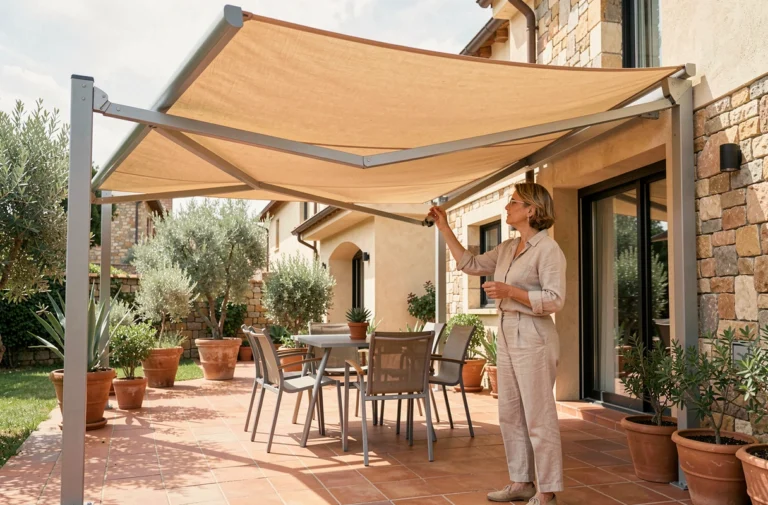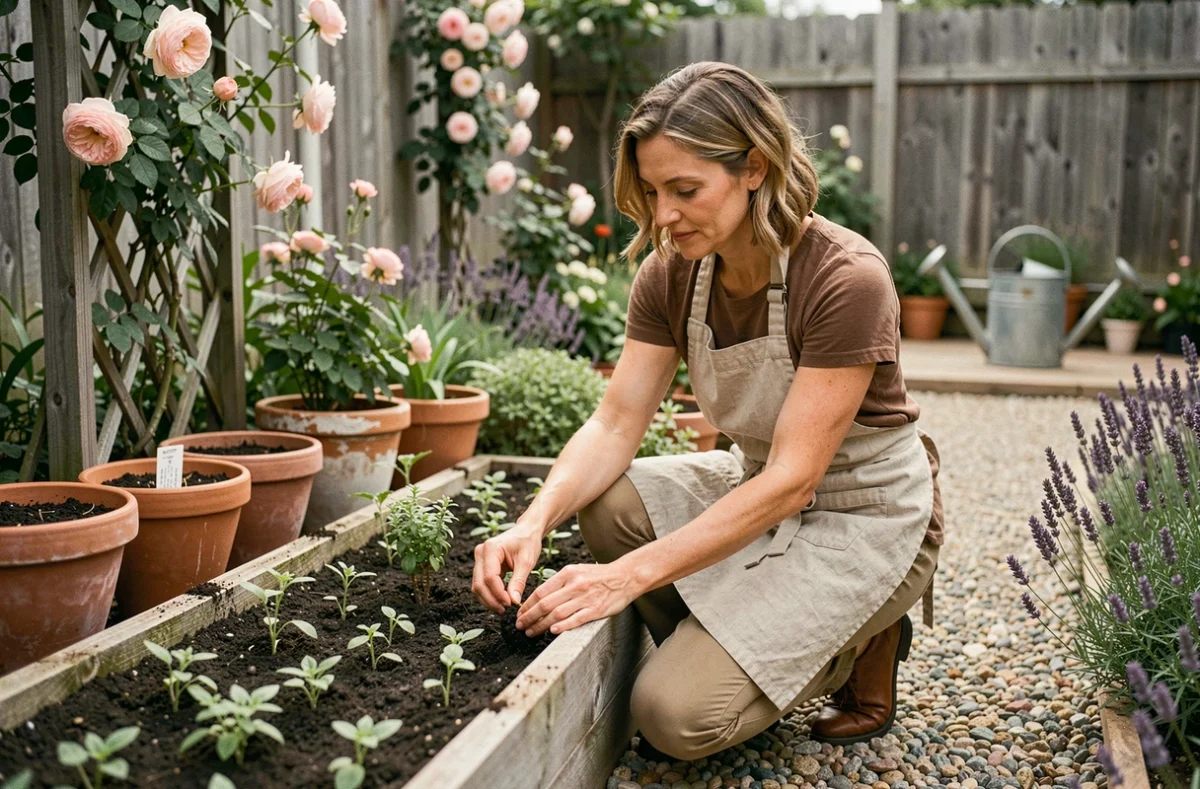
Designing a garden means balancing measurable constraints (area, exposure, soil permeability, local watering restrictions) with aesthetic preferences that are difficult to quantify. Rather than listing decorative styles, this article compares the technical factors that determine whether an outdoor design will remain viable over the long term.
Garden water management: a factor that shapes the entire project
Most garden design content treats watering as a maintenance task. The experience of the rain garden created in 2024 at ESTP in Cachan shows the opposite approach: runoff water feeds the plants without any additional watering. A small planted strip there collects water from a much larger paved courtyard.
This principle of reducing impermeable surfaces can also be applied to residential gardens. Replacing part of a paved terrace with a planted swale or sunken flower bed allows rainwater to be stored where it falls, rather than being directed into the drainage system.
Before drawing up plans for even a single flower bed, check the watering restrictions that apply to your address. During droughts, prefectural orders vary according to the alert level and location. Some distinguish between ornamental gardens and vegetable gardens.
The VigiEau public service lets you check the rules in force for each municipality. A garden designed around plants with high water needs can become difficult to manage if restrictions continue for several summers in a row, as has happened in Nord, Pas-de-Calais and Ariège in recent years.
At 100ideesjardin.fr, plant profiles and garden design guides cover hardiness and water requirements, helping you filter out appealing ideas that are unsuitable for local conditions.
Available space and exposure: a comparison of suitable garden designs
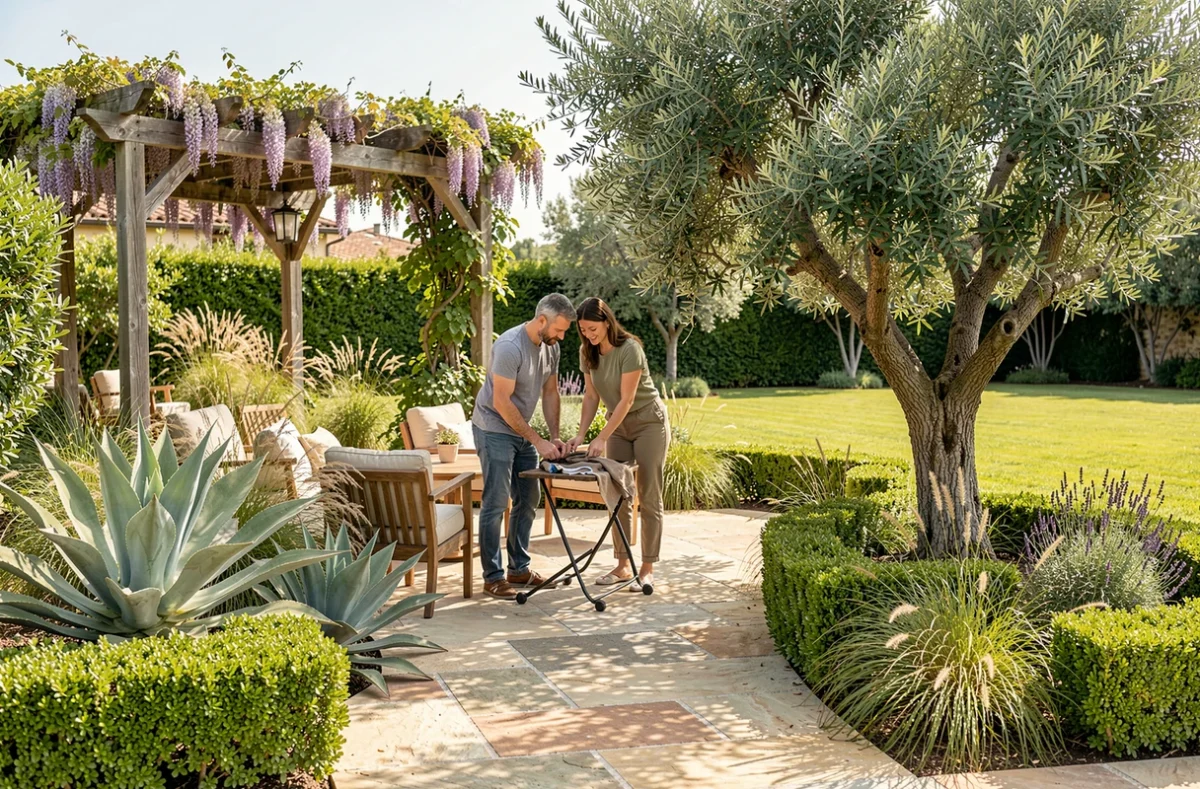
The choice of garden style depends less on personal taste than on two objective factors: usable area and predominant orientation. The table below compares these factors to identify the most suitable designs.
| Area | South / west exposure | North / east exposure |
|---|---|---|
| Under 50 m² | Paved patio + planters, Mediterranean plants (lavender, rosemary), pergola for shade | Shade garden: ferns, hostas, moss; composite wood paving to reduce reflected heat |
| 50 to 150 m² | Mixed layout: dining area on permeable paving + dry flower beds (ornamental grasses, yarrow), rainwater collector | Structured Japanese-style garden: maple, non-running bamboo, gravel, stepping stones |
| Over 150 m² | Wildflower meadow or drought-resistant lawn + mixed hedge, raised vegetable beds, rainwater swale | Landscaped woodland garden: evergreen shrubs, mulched path, covered seating area |
Exposure determines plant choice far more than the desired style. A Japanese garden facing due south with no natural shade requires frequent watering, which may be prohibited during summer restrictions. The same garden facing northeast can rely on natural rainfall in most parts of France.
Permeable or paved surfaces: a decision that affects the garden’s durability
A common approach is to pour a concrete slab for the patio, lay stabilized gravel for the paths, and plant whatever space is left. This increases impermeable surfaces and concentrates runoff in planted areas, which are often too small to absorb the volume of water.
Reversing this approach creates a more resilient garden. Here are the criteria to consider for each area of the outdoor space:
- High-traffic area (house entrance, gate): grass-jointed paving slabs or permeable pavers that let water filter through while withstanding daily foot traffic
- Relaxation area (garden lounge, dining area): a timber deck on joists with open space underneath for water infiltration, or compacted crushed gravel over permeable geotextile
- Planting area: living soil left uncovered and mulched to a depth of at least five centimetres to limit evaporation and nourish soil life
- Utility area (shed, compost bin, storage): gravel over a free-draining sub-base; avoid solid concrete slabs unless structural requirements make them necessary
Every square metre of impermeable surface removed reduces watering needs and limits runoff onto the road. The Cachan project demonstrates this principle on an institutional scale, but it applies just as well to a home garden.
Hedges and property boundaries: plant choices with regulatory implications
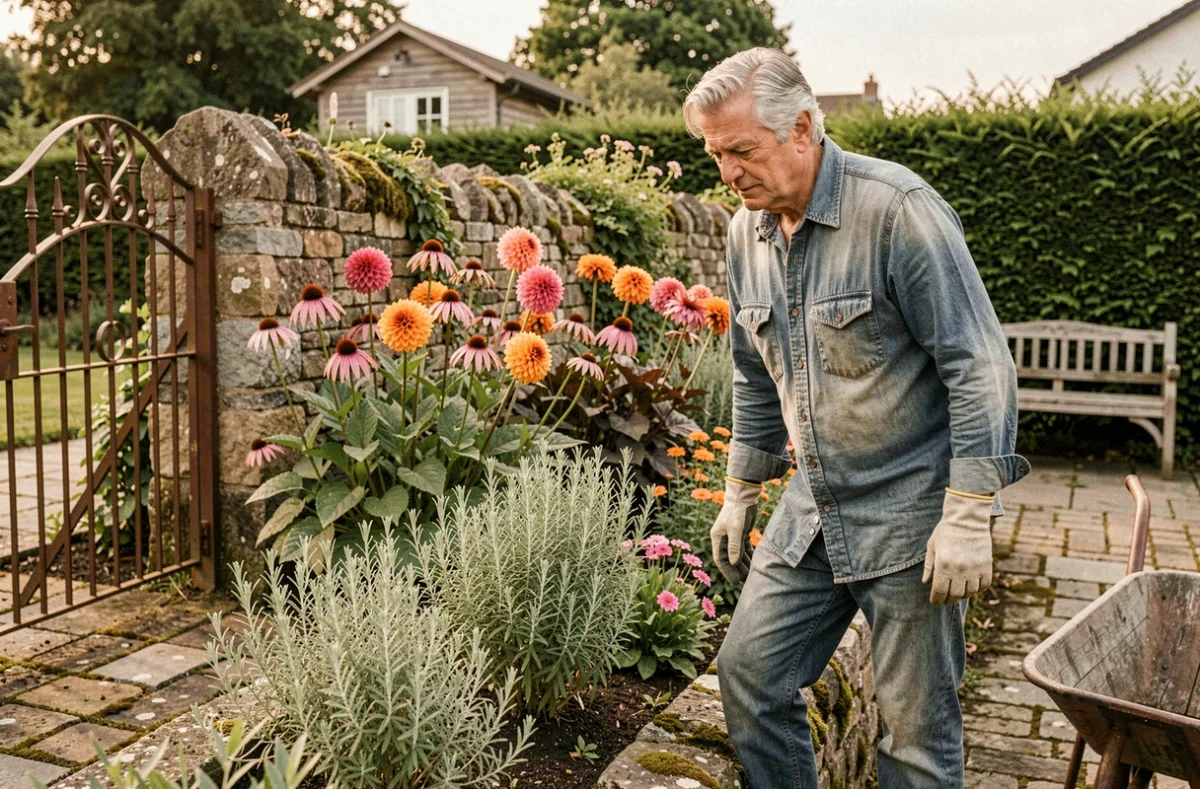
Hedges define spaces, provide privacy and support biodiversity. Hedge trimming is regulated: cutting a hedge back at any time can jeopardize its regrowth or destroy nests during the nesting season.
The species you choose also determines long-term maintenance needs. Here are a few practical guidelines:
- Mixed native hedge (hornbeam, hazel, dogwood): trim once or twice a year, high value for pollinators, manageable height
- Thuja or laurel hedge: fast-growing, but high-maintenance and of limited ecological value, and prone to fungal diseases in damp soil
- Low flowering hedge (spirea, abelia, potentilla): suitable for small gardens, grows no taller than one and a half metres, flowers from spring through autumn
Before planting, checking the legal distance from the property boundary is a precaution that is often overlooked. Rules vary by municipality and local urban planning regulations.
Invasive plants: a common pitfall in plant catalogues
Some plants sold at garden centres appear on lists of invasive plants identified by botanical conservatories. Running bamboo, Japanese knotweed and butterfly bush can spread throughout a garden and into neighbouring properties. Checking a species’ status before buying it can help you avoid costly eradication work.
A sustainable garden is built on local data: soil type, average rainfall, current water restrictions, orientation and actual area. The most inspiring ideas are those that take these factors into account before choosing flower colours or furniture styles.