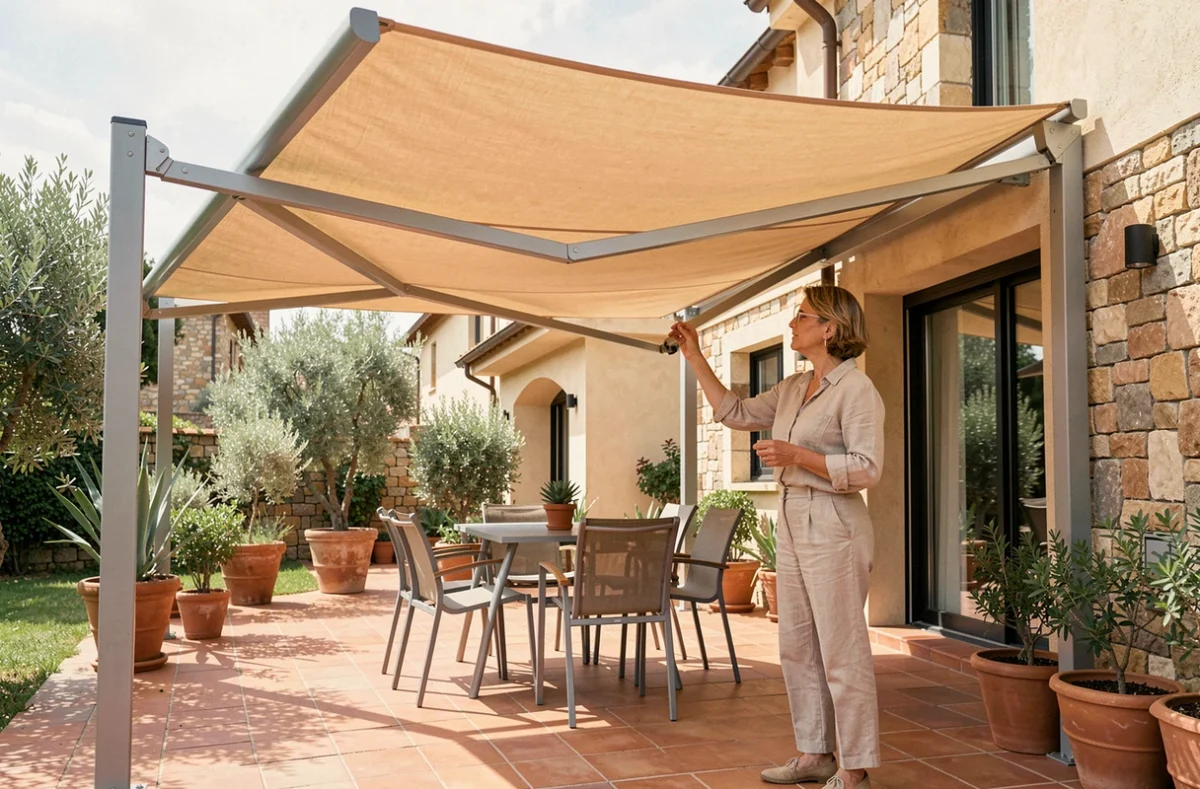
The awning is one of the most commonly installed features on French residential façades, but choosing a model is a decision that will affect you for years. Before comparing fabrics or mechanisms, two factors determine whether the project will succeed: local regulations and the product’s wind resistance. These are precisely the points most guides gloss over, even though they determine whether the awning can be installed and whether it will stand the test of time.
Awning regulations: what your local council may require
Changing the exterior appearance of a façade, even with a simple awning, may require a prior works declaration. This requirement depends on the municipality and the property’s location, particularly in a protected area (within the perimeter of a historic monument or an ABF zone). Checking with the planning department before placing an order can save you from having to remove a non-compliant awning.
In a condominium, administrative approval is not enough. The façade is often a common area, and the condominium rules may specify a color or particular model, or prohibit certain types of mounting. Approval from the property manager is separate from the declaration to the local council, and both procedures should be handled in parallel.
These restrictions can sometimes determine the model before any technical considerations come into play. If the Architecte des Bâtiments de France rejects a brightly colored awning, you will have to rethink the project—which is why it makes sense to settle the administrative requirements upfront. Before choosing an awning for your patio, make sure you confirm what is permitted on the façade in question.
Awning wind resistance: check the rating before the price
Wind resistance is the most overlooked technical factor when buying an awning. The EN 13561 standard classifies awnings according to their ability to withstand gusts. The wind resistance class is listed in the manufacturer’s documentation and varies from one model to another, even when the dimensions are identical.
An awning installed in a coastal area or on an upper floor is exposed to far greater forces than one covering a sheltered ground-floor patio. If the model you choose is not designed for these conditions, the fabric and articulated arms will deteriorate quickly, sometimes within the first season.
Wind sensor and operating limits
A wind sensor (anemometer) can automatically retract a motorized awning when gusts occur. This device helps prevent damage, but it does not replace the manufacturer’s guidance on the maximum wind speed the awning can withstand. An awning with a low rating and a sensor is still more vulnerable than a higher-rated awning without one.
The sensible approach is to check the declared class under the standard, then add a wind sensor as a safety measure—not as a substitute for structural strength.
Patio orientation and type of sun protection
The patio’s orientation makes a major difference to the type of awning that will work best. A conventional horizontal awning provides effective protection from high sun, typical of south-facing patios around midday. Low late-afternoon sun (west-facing exposure) calls for vertical or side protection, which an awning alone may not provide.
On a west-facing patio, you can add a drop-down valance (also called a retractable valance) that extends down the front of the awning. This extension blocks low-angle rays without requiring you to enclose the entire patio.
Exposure and awning cassette type
Exposure also affects how well the awning itself is protected when retracted. There are three configurations:
- A full-cassette awning encloses the fabric and mechanism in a closed housing. It is suitable for locations exposed to bad weather and moisture, such as a northwest-facing façade or an unsheltered patio.
- A semi-cassette awning protects the fabric but leaves the articulated arms visible. It is a good compromise for partially sheltered façades, such as those beneath a roof overhang.
- A non-cassette awning, with no housing, is suitable for patios already protected by an upper balcony or canopy. It costs less, but its lifespan depends heavily on the surrounding conditions.
The choice of cassette should depend on exposure, not budget. Installing a non-cassette awning on a façade exposed to driving rain to save a few hundred euros often means having to replace the fabric sooner.
Awning dimensions: width, projection and actual shaded area
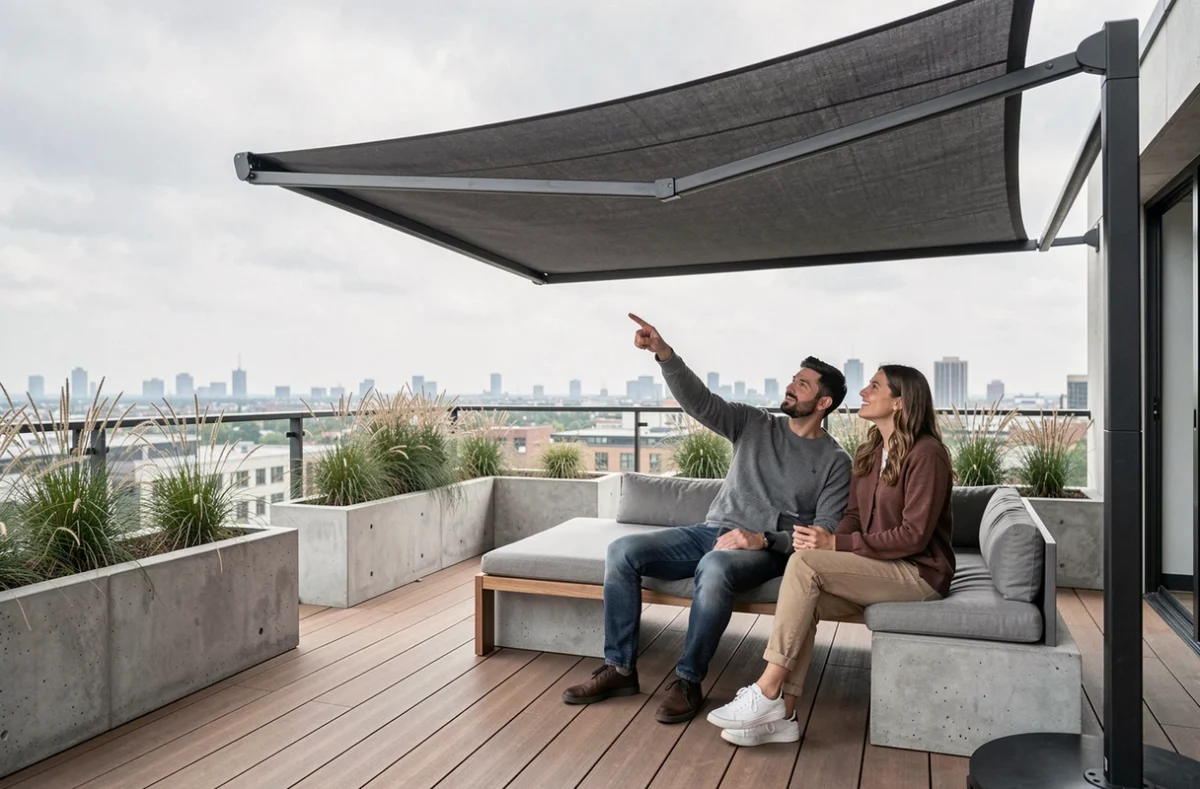
The awning should extend at least a few dozen centimeters beyond the area to be shaded on each side. The sun does not stay directly overhead all day: the shade shifts, and an awning sized too tightly will let the sun through in the late morning or early afternoon.
The projection (the distance the awning extends) determines the area that is actually shaded. If the projection is too short, the awning will be more decorative than functional, especially on a deep patio. Most manufacturers offer projections of around two to four meters, and your choice should be based on the patio’s actual depth.
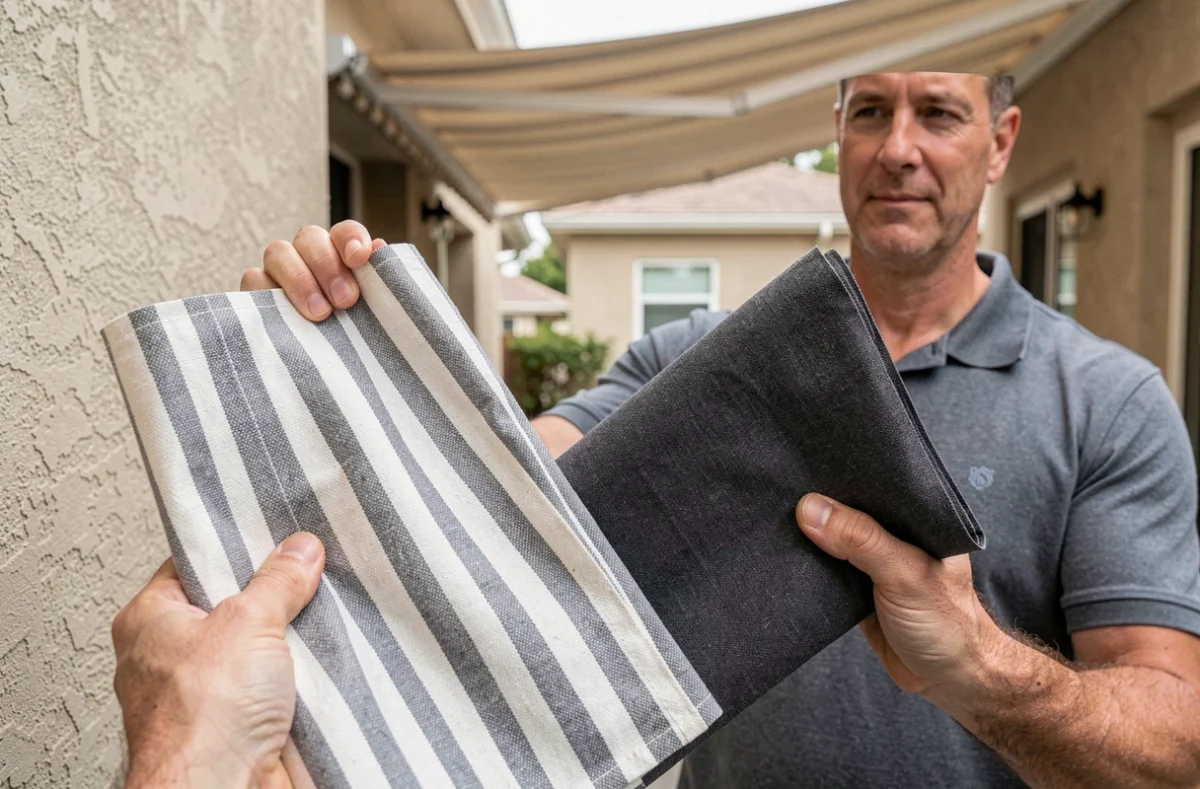
Awning fabric: material and density
Fabric is where quality differences are most pronounced. Two main types are available:
- Solution-dyed acrylic fabric offers good UV resistance and retains its color over time. It is the preferred choice for south- and west-facing exposure, where sunlight is most intense.
- Polyester fabric is less expensive and suitable for occasional use or patios with limited sun exposure, but it does not hold up as well to prolonged UV exposure.
- Some manufacturers offer micro-perforated fabrics that filter heat while preserving some visibility to the outside. They reduce the “lid” effect but let in more direct light.
The fabric’s weight and UV treatment matter just as much as the cassette type when it comes to the awning’s lifespan. A full cassette paired with budget fabric does not guarantee a longer lifespan than a semi-cassette fitted with quality acrylic fabric.
An awning that lasts is one whose every component (cassette, frame, fabric and motor) has been selected to suit the patio’s actual exposure—not one that boasts the best specifications in just one area. Checking the wind resistance class, confirming local regulations and choosing the right projection are the three steps that help prevent costly mistakes.